1. Ways to Deal with Resistance in a Relationship
When there is a sense of failure in a relationship and resistance arises, it is important to know how to deal with the situation and not try to ignore it. Here are some ways to help you cope with resistance in a relationship:
- Understanding the Source of Resistance: It is important to understand the reasons for the feeling of resistance that arises in you and your partner. Resistance can stem from fears, anxieties, or unrealistic expectations. Having an open and honest conversation about these feelings may help in understanding and resolving them.
- Dealing Maturely: It is important to approach dealing with resistance in a mature and self-assured manner. This includes emotional management, discussing difficult topics, and taking actions of determination and self-confidence with your partner.
- Maintaining Open and Honest Communication: Maintaining an open and honest relationship with your partner will help you deal with resistance and solve the problem in a mature way. Openness and honesty in conversation may help both parties understand and appreciate each other’s perspectives.
- Seeking Professional Help: In cases where you encounter difficult and complex resistances, it is recommended to seek help from a professional psychologist or couples therapist. Professional help can assist you in coping with the emotions and thoughts that arise in you and in solving the problem together with your partner.
Valuing the feeling of resistance and dealing with it maturely and in harmony with the relationship is an integral part of the emotional and relational process between the two partners. Along the way, you can strengthen the relationship and bring it to a new stage of integration and progress.
2. How to Communicate Effectively and Sensitively
Effective and sensitive communication is an important component in any relationship, especially in intimate relationships. The ability to express our feelings and understand the feelings of the other partner may improve our communication and strengthen the bond between us. How can we communicate efficiently and sensitively?
Firstly, it is important to carefully listen to the words of our partner. It is not just about hearing the words they say, but also understanding the conflicting emotions in each sentence. When we understand the background and feelings of the partner, we can provide emotional and empathetic responses.
Additionally, it is important to express our feelings openly and honestly. When we communicate directly and clearly, we allow the other partner to better understand us and connect with us on a deeper level.
No less important is the ability to deal with conflicts in a constructive and sensitive manner. When we understand the partner’s perspective and consider their feelings, we can find effective solutions that strengthen our relationship.
In conclusion, effective and sensitive communication leads to deeper understanding and intimate, healthy relationships. We must focus on the ability to express our feelings, listen carefully, and deal constructively with conflicts to maintain independence and healthy communication in our relationships.
3. How to Maintain Boundaries Between Partners
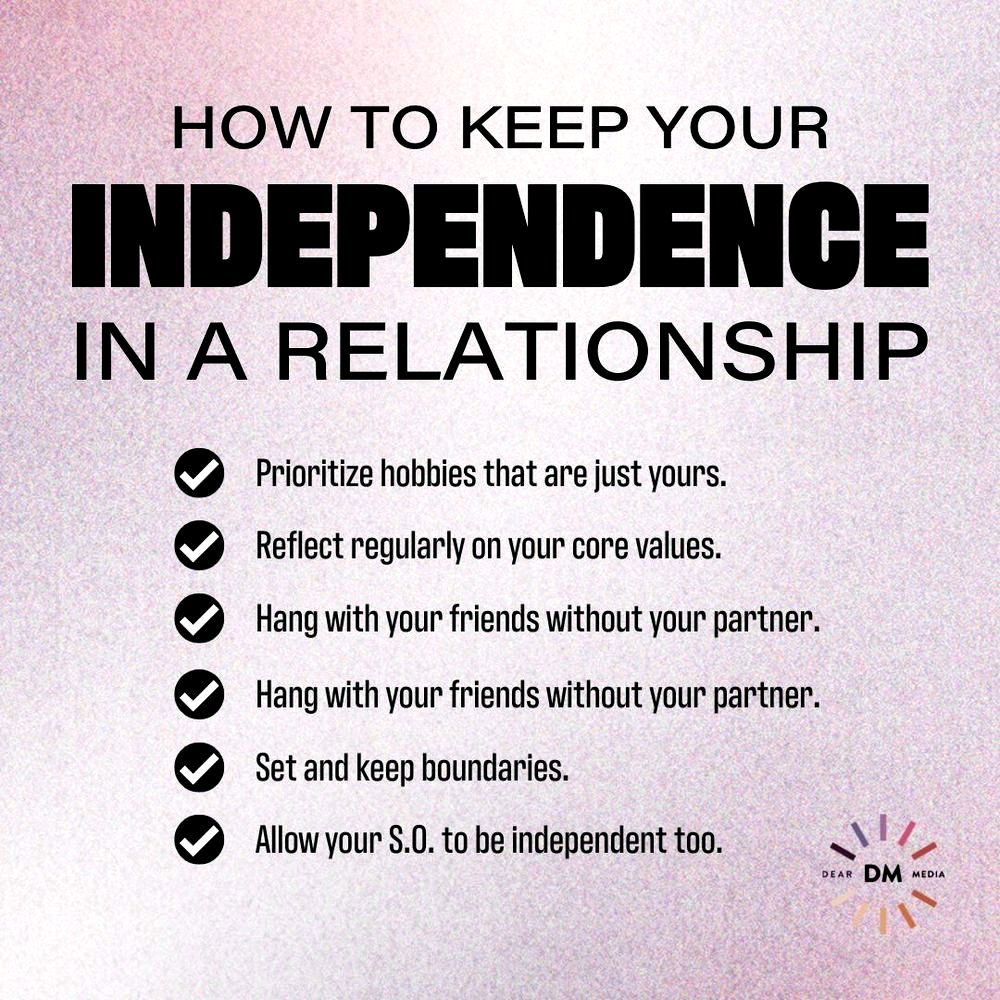
When it comes to maintaining independence in a relationship, it is important to understand the significance of boundaries between partners. Here are some important tips on how to maintain boundaries between partners in a relationship:
Men and women need internal independence to build a healthy and happy relationship
Prof. Yael Golan – Clinical Psychologist
1. Talk About It: It is always important to discuss the boundaries between you and understand your partner’s needs and feelings.
2. Set Clear Boundaries: Plan together which boundaries you want to set in the relationship and make sure to adhere to them.
Remaining true to ourselves is the key to maintaining independence in relationships
Dr. Amit Cohen – Clinical Psychologist
3. Respect the Other’s Boundaries: When your partner mentions a boundary, it is important to respect it and not violate it.
4. Allow Space for Independence: It is important to understand that everyone needs personal space and independence in a relationship, and to allow your partner to be independent and act according to their will.
5. Open Communication: When there are difficulties in the relationship, it is important to bring it up to your partner and discuss the problem openly and directly.
Ultimately, remember that maintaining boundaries between partners in a relationship is essential for building healthy and happy relationships. By creating an atmosphere of respect, support, and understanding, you can maintain independence and grow together as a couple.

4. Tips for Dealing with Loneliness in a Relationship
1. Give Yourself Time: It is important to understand that the feeling of loneliness in a relationship can be temporary and not something that will continue over time. Try to give yourself time and not seek immediate solutions.
2. Talk About It: Do not push your feelings aside. Try to talk with your partners and clarify what causes the feeling of loneliness and how it can be dealt with together.
3. Maintain a Connection with Yourself: Remember that loneliness in a relationship does not mean you are alone. Try to maintain a connection with yourself and find ways to give yourself love and support.
4. Deal with Feelings: Try to understand what triggers the feeling of loneliness in a relationship and how to cope with it. Develop your understanding and meet the feelings seriously.
5. Explore Your Capabilities: Explore your uniqueness and find new ways to express yourself in the relationship. This may lead to a deeper connection with your partner.

5. How to Communicate Your Feelings and Personal Needs
Intimate relationships are based on open and honest communication about the feelings and personal needs of both parties. In order to maintain independence in a relationship, it is important to know how to express your feelings and needs clearly and directly. Here are some tips on how to communicate with your feelings and personal needs:
- Be Open and Honest: Try to talk about your feelings in a straightforward and clear manner, without concealing or censoring emotions.
- Listen to Yourself: Give yourself the time and space to understand what you truly feel and what your personal needs are.
- Ask for Support: Do not hesitate to ask for support and help from those close to you when needed.
- Overcome Fears: Do not be afraid to express your feelings and needs, even if you fear facing vulnerability.
- Volunteer to Listen: Be available to listen to the feelings and personal needs of your partners and offer support.
At the end of the day, maintaining independence in a relationship requires open, honest, and assertive communication with your feelings and personal needs and those of your partners. You have the right to be who you are and to express yourself in a relationship in a healthy manner based on love and respect.
Ways to Strengthen and Maintain Personal Independence in a Relationship
1. Self-Understanding: A good understanding of yourself and your personal needs can help you maintain independence in a relationship. It is important to know what things compliment you and what may cause you to feel self-confident.
2. Open Communication: You can maintain independence in a relationship through open and honest communication with your partner. Discussing needs, desires, and feelings can help you maintain boundaries and not accept things that are not suitable for you.
Maintaining boundaries and understanding your own needs is important in every intimate relationship
Prof. Noa Levi – Clinical Psychologist
3. Physical Independence: It is important to maintain physical independence in a relationship and not lose your personal identity. Taking time alone, practicing financial independence, and focusing on moments of independence can ease the feeling of loss of independence.
4. Clear Boundaries: Setting clear boundaries and understanding them between you and your partner can help you protect your independence. It is important to talk about physical, emotional, and time boundaries and maintain them with respect and honesty.
5. Personal Activities: Find personal activities that you love and find interesting to do alone or with friends. This will help you maintain independence and time for yourself, which can lead to relaxation and self-reflection.
6. Psychological Support: In cases where it is difficult to maintain personal independence in a relationship, you can seek professional help from a psychologist or relationship expert. A conversation with an expert can help you better understand the situation and find ways to strengthen and maintain personal independence in the relationship.